A large number of people find themselves needing to have tattoos removed because they are influenced by personal, cosmetic and professional aspects. Some reasons for removing tattoos include a faded or poorly executed piece, allergic reaction to the ink or simply the wish to have smoother and cleaner skin. When ink is first applied to the skin, it settles into several layers including the dermis layer of the skin. At Vow Clinic Dubai we utilize state of the art laser tattoo removal systems that can safely destroy ink particles at a microscopic scale. We offer two types of laser tattoo removals – Pico Laser Tattoo Removal and Q-Switched Laser Tattoo Removal. In order to select the best possible laser treatment method for each client’s specific needs our specialists thoroughly evaluate the clients’ skin tone, depth of tattoo placement, type of ink used for the tattoo and overall health of the client prior to performing a laser treatment.
What Is Tattoo Removal?
Tattoo removal is a cosmetic procedure that reduces or eliminates unwanted tattoo ink from the skin. Ink in tattoos is placed so deep into the skin (the dermal layer) that the ink cannot be removed by the body, resulting in the tattoo being visible for many years. Modern methods to remove unwanted tattoos include using lasers to damage ink in the dermal layer. These laser methods will break down the ink pigments into smaller pieces, allowing the body to then remove the broken-down ink pigments.
With repeated treatments with a laser to remove an unwanted tattoo, the body will clear out the broken down ink pigments over time and therefore reduce the visibility of the unwanted tattoo.
How Does Laser Tattoo Removal Work?
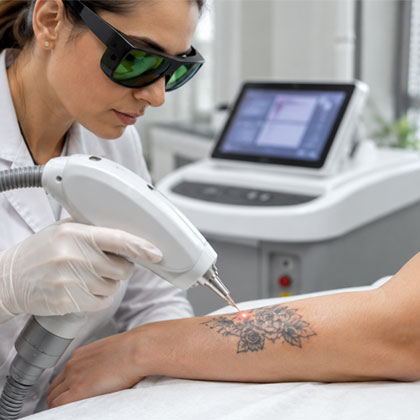
Laser tattoo removal delivers high energy light pulses directly at the site where you have received a tattoo. Depending upon what colors you want to remove or how deeply they are embedded into your skin, different wavelengths of light are used. When the light pulses hit the area of the tattoo that contains ink, it absorbs the light energy, heating up quickly. It is this quick heat up that results in breaking apart of the ink pigments. With all of this broken up ink now small enough for your immune system to recognize, your immune system sends immune cells (called macrophages) to remove the broken up ink through the lymphatic system. After removing each treatment, these same immune cells will continue to send remaining broken up ink through your lymphatic system and therefore cause further fading of your unwanted tattoo.
Advanced technologies such as Pico Laser, Q-Switched Laser and Nd:YAG Laser can target a wide range of tattoo colors, including black, red, blue and certain multi colored inks.
Who Is a Good Candidate for Tattoo Removal
You may be a good candidate for tattoo removal if you have:
- Unwanted Tattoos: Someone with a tattoos that they feels do not represent their personality, interests or current place in life.
- Cosmetic Tattoos: Someone with permanent makeup such as eyebrow tattoos, lip blushing, eyeliner tattoos and those whose cosmetic pigmentation has faded or changed colors over time.
- Cover Up Preparation: Those people who have existing tattoos which will require them to lighten up prior to allowing an artist to create a new design on top of it.
- Career Related Concerns: Visible tattoos that may affect professional opportunities, workplace requirements, or personal presentation in certain industries.
What Types of Tattoos Can Be Removed?
-
Professional Tattoos
Dense ink, deeper layers – usually needs more sessions
-
Amature Tattoos
Light ink and uneven depth – usually fades faster.
-
Cosmetic Tattoos
Correcting eyeliner or lip blushing.
-
Permanent Makeup
Removing permanent makeup specifically adjusting eyebrow tattoos.
Types of Tattoo Removal Lasers
-
Pico Laser Tattoo Removal
Uses Ultra short pulse length to break down ink quickly. Fewer treatments needed for pico lasers then traditional lasers.
-
Q-Switched Laser Tattoo Removal
A traditional method that is highly effective for removing most types of tattoo ink.
-
Nd:Yag Laser Tattoo Removal
Best type of laser for removing heavier, darker pigments that are deeper within the skin.
Pico Laser vs Q-Switched Laser
Pico Laser
- Faster ink fragmentation
- Often fewer sessions
- Strong performance on stubborn colors
Q-Switched Laser
- Proven traditional technology
- Effective on most tattoo types
- May require more sessions
Tattoo Removal Procedure
- Consultation: A client consultation will initiate the tattoo removal process as it allows the professional to discuss the objectives of the individual, their medical history, what they expect in regards to the tattoo removal process and then an examination of the tattoo to decide which methods would best suit the removal of the tattoo and how many treatments may be required.
- Assessment of Skin: An extensive evaluation of the individual’s skin type, size of the tattoo, colors of the ink used in the tattoo, age of the tattoo and how deep the ink is embedded in the skin will be conducted. This assessment will allow the professional to develop a customized treatment plan and minimize potential negative reactions to the treatment.
- Selection of Laser Technology: The correct laser technology and wavelength will be chosen according to the properties of the tattoo. Ink color is directly related to which laser setting will produce optimal results when treating each respective color of ink.
- Treatments: The treatment is initiated once the correct laser technology has been determined. During this process, controlled pulse patterns from the laser are applied to the tattooed area. The laser energy breaks down the pigment particles in the skin into small pieces that the body can naturally remove through its own processes over time.
- Post Treatment Care: After the session, the treated area is cleaned and aftercare instructions are provided. Patients are advised to protect the skin from sun exposure, keep the area moisturized, and follow all recovery guidelines to support healing and achieve the best possible result
How Many Tattoo Removal Sessions Are Needed?
It depends on your tattoo profile:
- Tattoo size
- Ink color and density
- Tattoo age
- Skin type and melanin levels
- Depth of ink placement
Tattoo Removal Recovery Timeline
First 24 Hours
Mild redness and warmth appear – totally normal.
First Week
Scabbing or slight blistering may show as skin heals.
Weeks 2 – 4
Pigment starts fading noticeably.
Long Term
Continuous fading continues as the body clears ink naturally.
Tattoo Removal Aftercare
- Protect skin from direct sun exposure
- Keep the area moisturized
- Avoid scratching or picking
- Follow clinic healing instructions
Potential Side Effects of Tattoo Removal
Most effects stay temporary:
- Redness
- Swelling
- Blistering
- Scabbing
- Temporary pigmentation changes
Benefits of Tattoo Removal
- Clear, refreshed skin appearance
- Gradual tattoo fading without surgery
- Perfect base for cover up tattoos
- Confidence boost that hits differently
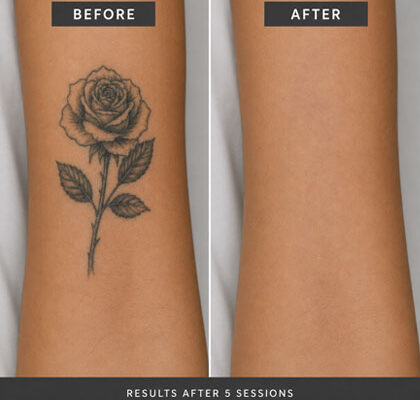
Tattoo Removal Before and After Results
Tattoo removal before and after results vary depending on several factors, including the tattoo’s size, age, ink colors, depth of pigment, skin type and the number of treatment sessions completed.
Most clients notice gradual fading rather than immediate results. Dark inks, particularly black and dark blue pigments often respond the fastest to laser treatment, while colors such as green, yellow, and certain shades of red may require additional sessions. As the treatment progresses, the tattoo becomes lighter, less defined and easier to conceal or remove completely.
Before treatment, the tattoo typically appears fully visible with concentrated pigment beneath the skin. After multiple sessions the ink gradually breaks down and fades, resulting in clearer, more natural looking skin.
Can Tattoos Be Removed Completely?
Yes – but not always 100% identical for everyone.
- Black ink fades the easiest
- Colored inks may take longer
- Deep professional tattoos need more sessions
- Skin type affects final clarity
Tattoo Removal Cost in Dubai
The average cost of Tattoo Removal Treatment in Dubai usually ranges from AED 300 – AED 1,500 per session depending on tattoo size, ink complexity, laser type used, number of sessions needed and clinic expertise.
Why Choose Vow Clinic for Tattoo Removal in Dubai?
At Vow Clinic Dubai our team provides an innovative, highly effective laser based method for removing unwanted tattoos. The successful removal of a tattoo is dependent upon numerous variables. These include tattoo size, tattoo ink color, how deep the ink is within the skin layer, patient’s skin type and how long it has been since the tattoo was applied. We take into account all of these variables when developing a customized treatment plan for each client. Utilizing Pico Laser and Q-Switched Lasers our specialists can effectively remove unwanted tattoo pigment from the skin while minimizing damage to surrounding skin. Our ultimate goal is to provide clients with the most effective removal of their unwanted tattoos by gradually fading them out while supporting the health of the surrounding skin.
FAQs
What Is The Process Of Removing A Tattoo?
Removing a tattoo involves applying laser technology in order to break up the tattoo ink into smaller pieces which are ultimately eliminated from your body over time.
How Does Laser Tattoo Removal Work?
The laser targets and breaks apart the tattoo ink located below the skin. Then, the body’s immune system slowly eliminates the broken-down ink fragments.
Are All Tattoos Removable?
While many tattoos can be removed nearly entirely, the extent of this varies depending upon the colors used to create it and how easily they absorb the laser, the location and depth of the ink, an individual’s skin type and their overall ability to heal.
Does Tattoo Removal Hurt?
Most people who undergo laser tattoo removal report feeling a sensation that feels like snapping a rubber band against their skin. However, there are cooling methods available that can increase comfort during treatment.
Is Pico Laser Better Than A Q-Switched Laser?
Pico Laser is becoming increasingly popular among those undergoing tattoo removal. However, a Q-switched laser is an extremely effective option for most tattoo types.
How Long Will It Take To Heal From Each Session?
On average, initial healing occurs within 1 – 2 weeks. Although you should continue to see your tattoo fade for several weeks after each session.
Will My Tattoo Removal Leave Scars?
Using the correct laser setting and when performed by a well experienced professional, the risk of scarring is minimal.
How Many Sessions Of Tattoo Removal Will I Need?
Most people will require 6 – 10 sessions to complete their removal. However, if you have large or dark tattoos or multiple colors in your design, you may require more.
Can I Exercise After Having A Session Of Tattoo Removal?
You should allow at least 24 – 48 hours before returning to normal activity.
When Can I Expect Results From Treatment?
Although some clients may begin noticing results immediately after the first couple of sessions, it is likely that you will continue to see improvements in your tattoo’s appearance until completion of the treatment plan.