What Is Rhinoplasty?
Rhinoplasty, commonly known as a nose job is a surgical procedure that aims to improve the look and function of the nose. It may change the proportions, form, nostrils, nose tip and facial harmony of the nose without compromising the harmony of the face.
Rhinoplasty is performed by many people to balance the face, fix nasal defects that are hereditary, correct damage resulting from an accident or injury or certain breathing problems produced by nasal structural abnormalities.
Why Do People Choose Rhinoplasty?
The nose is situated in the middle of the face making it one of the most prominent facial features. Facial proportions can be greatly enhanced by even minor changes.
There are many reasons why people might opt to have a rhinoplasty:
- A big nose hump
- A crooked or asymmetrical nose
- A wide nasal bridge
- A large or wide nose
- A nose that hangs down or is bulbous
- An abnormal shape of the nose due to trauma
- Structural abnormality causing breathing difficulties
- Displeased with its shape
Who Is A Good Candidate For Rhinoplasty?
Good candidates for rhinoplasty include people who:
- Have completed facial growth and development
- Are in good general health
- Want to improve the appearance of their nose
- Have snoring, trouble breathing or breathing problems due to the structure of the nose
- Set expectations for surgery results accordingly
- Pursue lasting change instead of quick fixes
A thorough consultation is important to determine if you have goals and anatomical requirements for rhinoplasty.
Types Of Rhinoplasty
- Open Rhinoplasty: In open rhinoplasty, the surgeon makes a small cut between the nostrils, enabling him to see the nose structures clearly. This technique is more precise for complex reshaping and reconstruction surgeries.
- Closed Rhinoplasty: Closed rhinoplasty involves incisions that are made inside the nostrils of the nose only. The surgery does not involve any external incision so it has a low chance of scarring and is a less visible surgery.
- Revision Rhinoplasty: Nose revision is performed to fix issues that occurred with an earlier nose surgery. It is used to correct irregularities in the appearance of the skin, to correct a previous procedure, or for when an earlier procedure left an undesirable result.
- Ethnic Rhinoplasty: Ethnic rhinoplasty not only improves the look of the nose, but it also maintains the natural facial features and ethnic identity of the patient.
- Male Rhinoplasty: The goal of a male rhinoplasty is to enhance the appearance of the nose, while preserving the masculine face and facial structure.
- Functional Rhinoplasty: The goal of functional rhinoplasty is to enhance nasal breathing and function. This procedure is often performed by patients with structural abnormalities that impair the quality of their breathing.
Rhinoplasty vs Septoplasty
| Rhinoplasty | Septoplasty |
| Focuses on changing nose shape as well as appearance | Focuses on correcting a deviated spetum |
| Improves facial aesthetics | Improves nasal airflow |
| Enhances facial balance | Addresses breathing difficulties |
| May include cosmetic modifications | Primarily functional in nature |
| Can be combined with septoplasty | Does not alter external appearance |
The Rhinoplasty Consultation Process
A comprehensive evaluation is the basis for successful therapy.
At the consultation, the surgeon might:
- Check your medical record.
- Talk with your doctor or other health care provider about your thoughts and plans
- Examine internal and external nasal structures
- Analyze facial proportions
- Take clinical photographs
- Apply digital imaging to treatment planning
- Describe surgical options and prognosis
The assessment is personalized to help develop a treatment plan based on your anatomy and desire for outcomes.
How Is Rhinoplasty Performed?
- Consultation and Planning: Before developing a personalised surgical plan, the surgeon will assess your nose, face, and goals for surgery.
- Anesthesia: You will be comfortable during the procedure if you receive general anaesthetic or IV sedation.
- Incisions: The incisions are made either within the nostrils or across the columella.
- Bone Reshaping: The surgeon takes careful consideration of the contour and profile of the nose and carefully adjusts the nasal bones to achieve the desired changes.
- Cartilage Reshaping: Refining, repositioning or reinforcing cartilage to enhance shape and structural support.
- Nasal Tip Refinement: The nasal tip can be narrowed, elevated, sculpted or reshaped based on the treatment objectives.
- Closure: The cuts are stitched up and a protective splint is placed over them to help heal.
Rhinoplasty Recovery Timeline
Recovery is a gradual process and improvements will come slowly over time.
First Week
Patients typically experience:
- Mild swelling
- Eye bruising
- Nasal congestion
- Temporary discomfort
- Protective splint placement
Patients usually come back to have the splints removed after about a week.
First Month
In the first month:
- Most bruising resolves
- The swelling is still on the decline.
- The shape of the nose is refined.
- Daily activities are settled into a good routine
Three Months
At this stage:
- Contour improvements are evident
- The nose looks more natural
- Swelling is still continuing to decrease
One Year
After one year, the final results of the rhinoplasty can be seen in full when the tissues settle altogether.
Potential Risks Of Rhinoplasty
As with any surgery, there are risks involved with rhinoplasty.
These may include:
- Infection
- Bleeding
- Temporary swelling
- Prolonged bruising
- Asymmetry
- Breathing difficulties
- Delayed healing
These risks can be minimized if a surgeon has experience performing the procedure and if you follow the instructions you will be given after surgery.
Rhinoplasty Results
The effects of rhinoplasty on both how you look and how you breathe are significant for many people who have undergone this surgical procedure.
Some of the potential advantages include:
- Enhanced facial harmony
- Better side profile
- Better nasal symmetry
- Smaller or reflected nose tip and bridge
- Increased self confidence
- Improved breathing function
- Long lasting results
Results continue to refine as swelling gradually resolves.
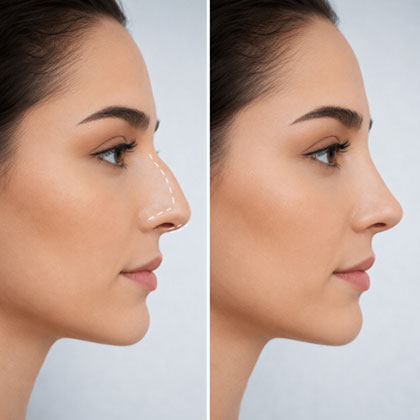
Rhinoplasty Before And After Expectations
Prior to your surgical procedure, patients should realize that rhinoplasty has one purpose – to help improve upon your own facial proportions, rather than try to make you into someone entirely new.
After your rhinoplasty, all of our patients notice impoved nasal shape. They also find that there is improved facial feature proportionality, improved facial profile definition and some degree of continued gradual improvement during the first few months after surgery.
Rhinoplasty Cost In Dubai
The price of rhinoplasty in Dubai can vary based on several factors, including:
- The complexity of procedure
- The surgeon’s level of expertise
- Technique utilized by the surgeon performing the surgery
- Fees associated with facility usage
- Requirements related to anesthesia utilization
- Revision Surgery Requirements
Why Choose Vow Clinic for Rhinoplasty in Dubai?
At Vow Clinic Dubai, our goal is to provide each patient with a naturally refined nose that complements their overall facial features. The aesthetic outcomes depend on several factors such as: the existing nasal structure, the thickness of the skin, facial proportions, breathing function and the way the nose appears in relation to the rest of the face. Our surgeons assess your nose and facial anatomy prior to recommending which rhinoplasty technique will allow for the most aesthetically pleasing and safest outcome. Advanced surgical techniques are employed to refine the nasal bridge, reshape the nasal tip, improve symmetry and support optimal nasal function, all while maintaining natural looking results. Our goal remains the same – to make you look, feel and be more confident with a balanced, harmonious and naturally enhanced nose that complements your facial aesthetics.
FAQs
What is rhinoplasty?
Rhinoplasty is a surgical procedure that reshapes the nose to improve appearance, function, or both.
What is the difference between rhinoplasty and septoplasty?
Rhinoplasty focuses on changing the nose’s appearance, while septoplasty corrects a deviated septum to improve breathing.
How long does rhinoplasty surgery take?
Most rhinoplasty procedures take between 2 and 4 hours, depending on complexity.
Is rhinoplasty painful?
Patients typically experience mild discomfort, swelling, and congestion rather than significant pain. Prescribed medications help manage recovery comfortably.
How long is recovery?
Most patients resume routine activities within 1 to 2 weeks, while final results continue to develop over several months.
When can I return to work?
Many patients return to work or social activities within 7 to 14 days after surgery.
Will there be scars?
Closed rhinoplasty leaves no visible external scars. Open rhinoplasty involves a small incision that usually heals discreetly.
Can rhinoplasty improve breathing?
Yes. Functional rhinoplasty can correct structural issues that restrict airflow and contribute to breathing difficulties.
How long do results last?
Rhinoplasty results are generally permanent, although natural aging continues over time.
What is revision rhinoplasty?
Revision rhinoplasty is a secondary procedure performed to correct or improve the results of a previous nose surgery.
What is ethnic rhinoplasty?
Ethnic rhinoplasty enhances nasal appearance while preserving cultural and ethnic facial characteristics.
How much does rhinoplasty cost in Dubai?
The cost varies based on the complexity of the procedure, surgical approach, and individual treatment requirements. A consultation provides an accurate estimate.